23, Jul 2025
Stakeholders Consultation and Validation Workshop on Decarbonization through Innovative Clean Hydrogen Technology in Pakistan (Child Project of the Global Clean Hydrogen Programme for Pakistan)
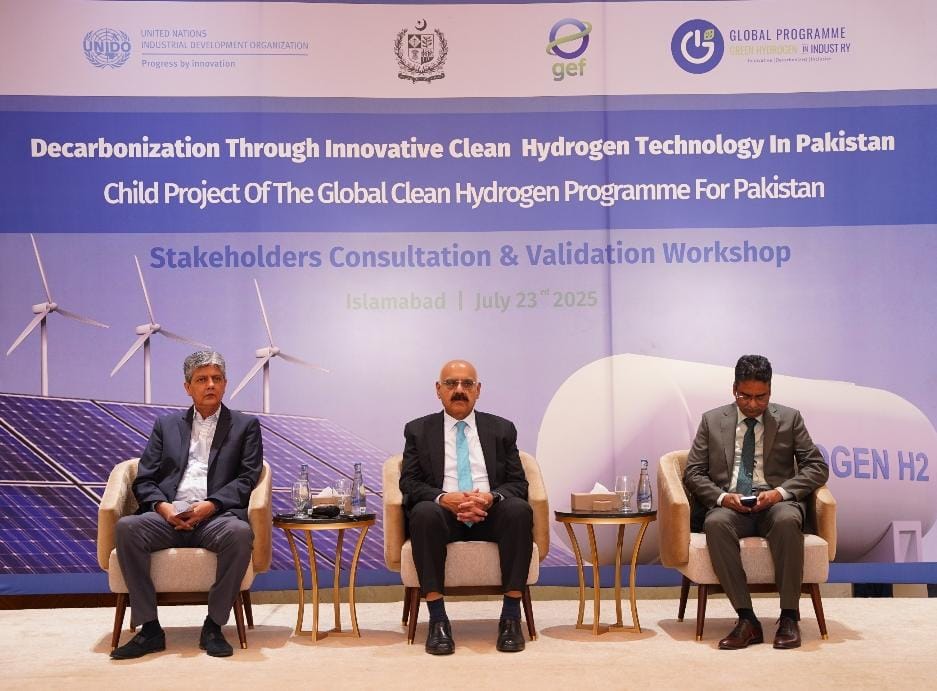
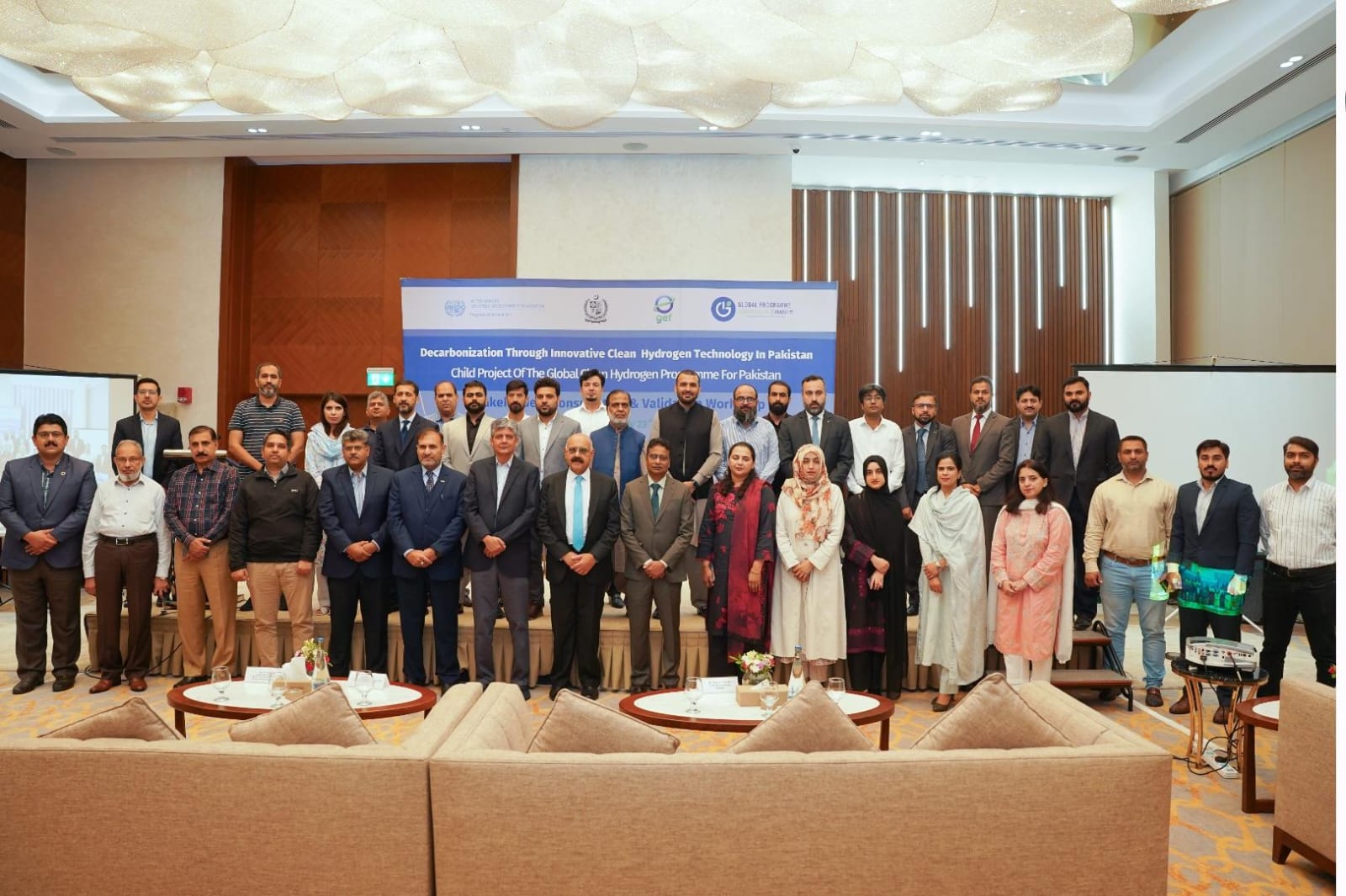
The Stakeholders Consultation and Validation Workshop on "Decarbonization through Innovative Clean Hydrogen Technology in Pakistan," a child project of the Global Clean Hydrogen Programme, was held on 23 July 2025 at Movenpick Hotel, Islamabad. Organized by the United Nations Industrial Development Organization (UNIDO), the workshop convened senior government officials, energy experts, and other public and private stakeholders to advance the integration of green hydrogen into Pakistan’s energy ecosystem.
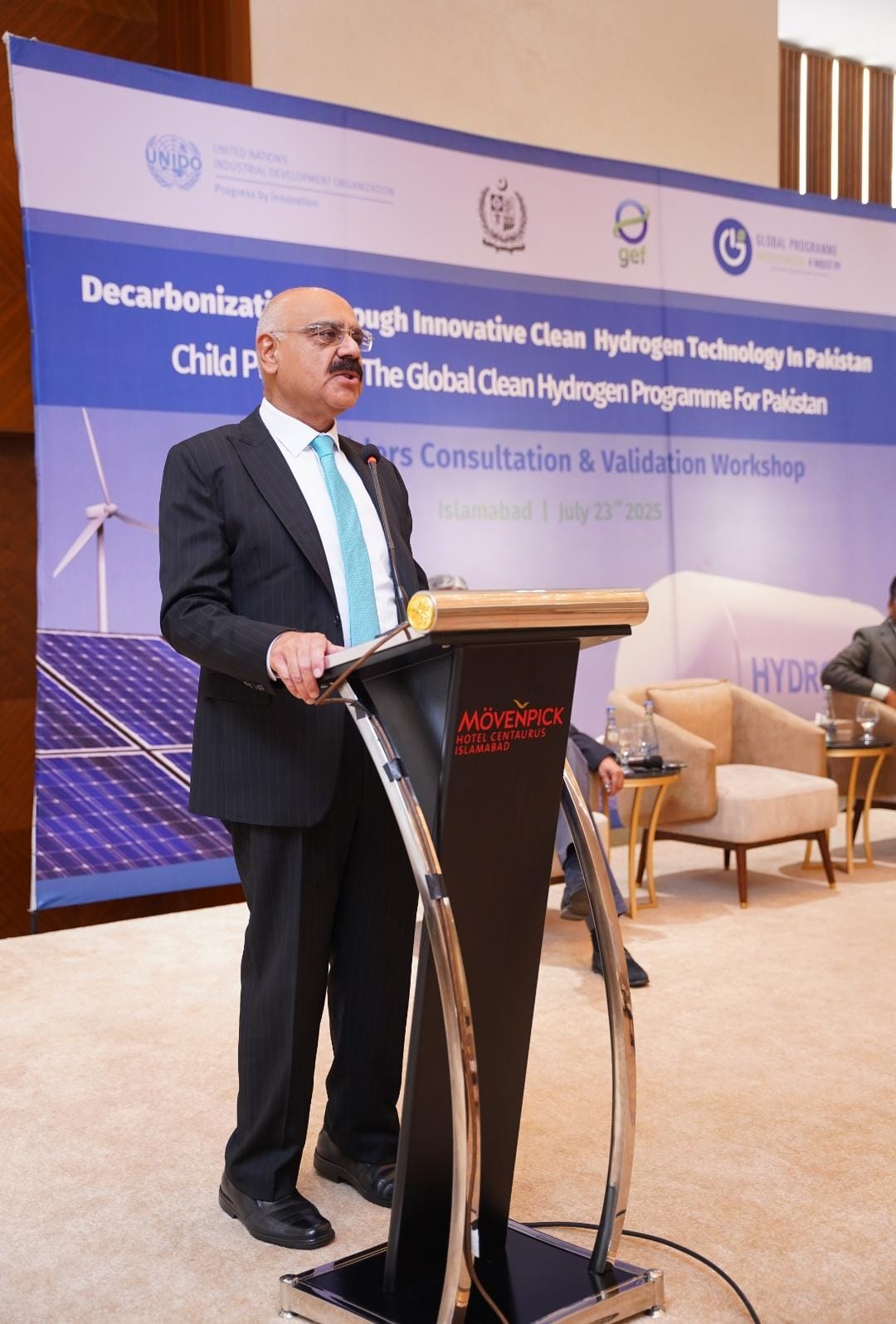
Mr. Shah Jahan Mirza, Managing Director, Private Power and Infrastructure Board (PPIB), delivered a keynote address, emphasizing the critical role of green hydrogen in decarbonizing high-emission sectors such as fertilizers, chemicals, and refining, while enhancing Pakistan’s energy security. He highlighted the country’s substantial renewable energy potential, including Pakistan’s coastal wind potential and solar irradiation of 5.3–6.2 kWh/m²/day, capable of producing significant amount of green hydrogen annually. Mr. Mirza highlighted that the global target to reduce the Levelized Cost of Hydrogen to $1/kg by 2050, with Pakistan projected to achieve $2.20/kg subject to significant electrolyser cost reductions and competitive renewable energy pricing. He also added that an MoU between the Sindh Government and China for a 150,000 kg/day green hydrogen plant in the Gharo–Jhimpir wind corridor, supported by a $2 billion investment.
Mr. Mirza further emphasized PPIB’s active contribution to the National Hydrogen Strategy, currently being developed by the Ministry of Planning, Development & Special Initiatives, which aims to provide a comprehensive roadmap for green hydrogen adoption. He highlighted the importance of pilot projects, local electrolyzer manufacturing, and international partnerships, such as the EU’s H2Global initiative, to drive technology transfer and financing. He also underscored the potential of targeting the fertilizer industry to reduce 6 million tons of CO₂ annually and exploring rooftop solar and biohydrogen solutions to support urban energy transitions.
The workshop concluded with a consensus to finalize the project document process within the remaining engagement period, incorporating Pakistan’s local context and fostering collaboration with all stakeholders to ensure alignment with national priorities and sustainable energy objectives.
Photo(s)